PixelPhrase ™ Pics & Word Game
- 4.6
- Rating
- 100.00K
- Installs
- Free
- Price
 Analysis by App-foxy
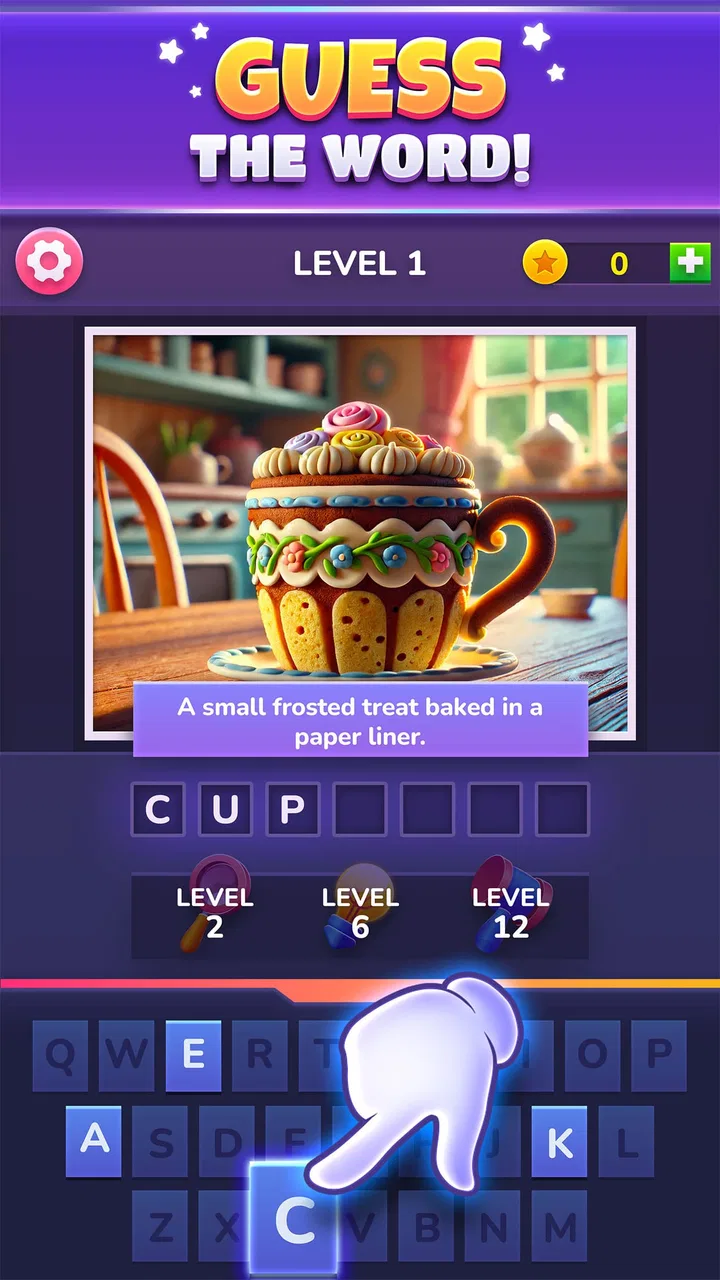
Some trivia games are built around speed, some around a huge question bank, and some around the simple pleasure of recognizing a clue before anyone else does. PixelPhrase ™ Pics & Word Game belongs to the third group, but it adds a visual twist that changes how I approach each round. Instead of relying only on written questions, it asks me to interpret an image and connect what I see with a word or phrase. That makes the first few sessions feel more like solving small visual riddles than taking a traditional quiz.
After spending time with it, my opinion is positive but measured. The game is easy to pick up, free to start, suitable for Everyone, and clearly aimed at short sessions. Its strongest quality is the way a familiar picture can suddenly suggest an unexpected answer. Its weaker side is that this kind of puzzle depends heavily on the quality and clarity of the visual clue. When the connection feels fair, I want to solve another one. When it feels too loose, the challenge can become guesswork rather than knowledge.
Why the first week feels so appealing
The opening experience is uncomplicated. I do not need to learn a complicated control scheme or understand a long progression system before playing. I look at the picture, consider the possible meaning, and try to form the word or phrase that links the visual elements together. That low barrier matters because it makes the game suitable for a quick break, a quiet evening, or a shared moment with someone who does not usually play mobile games.
You May Also Like

 Pandora - Music & Podcasts
Pandora’s Music Is Easy to Start, but Harder to Recover
Pandora’s strength is its low-effort path from a seed to a station. Its weak spot is how much confidence it asks you to place in connection, setup, and quiet recovery.

 AccuWeather: Weather Radar
AccuWeather Review: A Quick, Clear Forecast for Everyday Decisions
For everyday plans, the best forecast is the one you can understand quickly. AccuWeather makes rain timing, radar, and local conditions easy to act on, with a few trade-offs.

 Hill Climb Racing
Why Hill Climb Racing Still Turns Crashes Into One More Run
A tiny car, a bumpy hill and one more upgrade: Hill Climb Racing keeps resurfacing because its simple chaos makes every near-miss feel personal.

 AliExpress - Shopping App
AliExpress Makes Global Shopping Feel Personal, but Shoppers Bear the Risk
AliExpress turns a global marketplace into a pocket-sized discovery engine. Its reach is useful, its shopping loop compelling, and its trade-offs easy to miss.

 Lords Mobile: Kingdom Wars
Lords Mobile Is a Kingdom-Building Routine, Not a Quick Match
A case-by-case verdict on the building, battles, device demands, and social commitments that make Lords Mobile rewarding for some players and exhausting for others.

 PDF Scanner app - TapScanner
TapScanner Makes Paperwork Easier to Capture, Check, and Share
TapScanner makes scanning with a phone feel less like a rescue operation and more like a dependable step in getting work done. Its capture tools are useful, though not flawless.
More From Our News Desk
View All News


The visual format also gives the game a different rhythm from ordinary trivia apps. A conventional quiz usually asks me to retrieve a fact from memory. Here, I am combining recognition, association, and language. I might notice an object first, then a color or arrangement, and only afterward understand the intended phrase. That sequence creates a small “aha” moment that is more satisfying than simply selecting a familiar answer from several choices.
In my first sessions, the best puzzles were the ones that gave me enough information to make progress without making the answer immediately obvious. Those clues encouraged me to slow down and inspect the image rather than tapping through automatically. This is one reason the game works well for people who enjoy wordplay but do not necessarily want a demanding general-knowledge test.
The developer, MEGARAMA, has positioned the title as a trivia game rather than a broad collection of unrelated mini-games. That focus helps the identity stay clear. I know what kind of mental activity to expect: looking, interpreting, and guessing. The store summary describes it as an AI picture-puzzle experience, and that emphasis is important because the images are not merely decoration around a standard question. They are the central material I have to read.
There is also a useful social quality here. I can show a difficult image to another person and ask what phrase they see in it. People often notice different details, so a puzzle that stops me can become a quick conversation rather than a private failure. This makes it a better casual group game than a quiz that depends on one person having the strongest factual memory.
One practical tip is to avoid typing or choosing an answer too quickly when the first interpretation seems obvious. I found that the image often works through a second association rather than its most literal object. Looking for a relationship between the parts, not just naming the most visible item, is a more reliable approach. That small change in method makes the game feel more thoughtful and reduces the frustration of treating every puzzle like a basic image-labeling exercise.
The early appeal is supported by its store performance. PixelPhrase has an average rating of 4.7 from around 2.1 thousand ratings, with over 100 thousand installs. Those figures do not prove that every puzzle will suit every player, but they do suggest that the central idea is connecting with a substantial casual audience. I can understand why: the premise is immediately readable, and the game does not demand a large time commitment before it becomes enjoyable.
It is also free to download, which makes the first-week decision easy. I can try the basic experience before deciding whether it deserves a place on my phone. The age rating of Everyone broadens its use for families, although younger players may still need help with phrases or cultural associations that are not obvious from the picture alone.
What makes the puzzles feel fair
Fairness is more important here than in a normal multiple-choice quiz. In a standard question, the wording usually tells me what kind of knowledge is required. In a picture puzzle, the image has to communicate the intended path without explaining it. The strongest rounds give me several small clues that converge on one phrase. The weaker ones can leave too many possible interpretations, especially if I do not share the same cultural reference as the puzzle creator.
I recommend treating the game as an exercise in flexible interpretation rather than a test of intelligence. If I am stuck, I mentally describe every visible element, including position, repetition, contrast, and unusual combinations. This is more productive than staring at the whole picture and waiting for inspiration. It is a concrete workflow that turns a vague guessing task into a sequence of observations.
Another useful habit is to say possible answers aloud. A phrase can sound natural even when it is not obvious in written form, and speaking the possibilities helps me notice whether the image supports a complete expression or only a single word. This is especially useful when playing with friends, because different people can contribute partial associations without one person needing to solve everything alone.
Whether it keeps its place after the novelty fades
I look at whether the picture-and-phrase loop still feels worth opening once its initial surprise settles. For me, the useful test is to notice whether a quick puzzle fits naturally into a break, rather than expecting the game to provide a long session every time. That distinction helps set a fair expectation for its lasting appeal.
Month-to-month value depends on how you play
The first-week experience is the easiest part to recommend. The more difficult question is whether the game remains useful after the novelty of visual guessing wears off. For me, its long-term value depends on treating it as a small recurring activity rather than a game I must play for long stretches. A few puzzles during a break can stay pleasant; trying to clear a large run in one sitting makes the format more repetitive.
This is a game I would keep for short mental resets, not as my main trivia destination. If I want a deep knowledge challenge, a quiz app with carefully organized subjects and explanations would be a better choice. If I want a competitive daily routine, a game built around timed leaderboards or head-to-head matches may offer stronger motivation. PixelPhrase occupies a quieter space: it gives me visual wordplay without requiring a serious commitment.
That distinction matters when deciding whether to leave it installed. I do not need to open it every day for it to be useful. It can earn its place through occasional convenience, much like a small puzzle book kept beside a chair. The recurring value comes from having a quick, low-pressure activity available when I want to think for a few minutes but do not want a full game session.
For families, the game can work as a shared guessing activity, but I would not assume every puzzle has the same accessibility for every age. A child may recognize the objects in an image but not understand the phrase the game expects. An adult may solve the wording but overlook a visual detail. That difference can be enjoyable when people cooperate, though it can also make solo play feel unfair if the answer depends on an expression I would not normally use.
The game is also a reasonable fit for language learners, with a qualification. Visual clues can help connect a phrase with a concrete image, but they may not explain why a particular expression is correct. I would use it as a light vocabulary prompt, not as a replacement for structured language study. The lack of context around a phrase can limit how much I learn from a correct answer.
Its current version is 2.2.3, and the title has been available since July 26, 2024. Those details place it in the relatively recent part of its life rather than making it a long-established classic. I would therefore judge it by the quality of the play loop itself, not by expecting the depth or refinement of a trivia platform that has been expanding for many years.
The maintenance burden is low, but the content still has to stay fresh
From a user’s point of view, the maintenance burden is modest. The game is not asking me to manage a complicated profile, build a collection, or learn a large set of systems before I can return. I can open it and start solving. That simplicity is a real advantage for a casual title because there is little friction between deciding to play and actually seeing a puzzle.
The trade-off is that a visual word game relies strongly on a steady feeling of discovery. Once I have seen enough puzzles with similar construction, I may begin predicting the intended answer pattern instead of engaging with the image. That is the point at which maintenance becomes a content question: the game needs enough variety in its clues and phrasing to keep the solving process from becoming mechanical.
I also pay attention to the purchase structure. The game is free, but optional in-app purchases range from $0.99 to $89.99 per item. That is a wide span, so I would approach spending carefully rather than assuming every purchase is necessary for enjoyment. My advice is to play the free experience first, decide whether the puzzle quality remains appealing, and set a personal limit before buying anything. A casual word game should not quietly become an impulse-spending habit.
This is one area where the title differs from a paid puzzle book or a one-time premium game. A free entry point is convenient, but it can make the long-term cost less predictable if I start purchasing repeatedly. Players who prefer a fixed price and a clearly bounded experience may feel more comfortable with a premium alternative, even if that alternative offers fewer puzzles or less frequent content.
Another maintenance issue is mental freshness. I found that the game benefits from breaks. If I return after a day or two, the images feel more inviting than they do after a long uninterrupted session. That is not a flaw unique to this title; it is a consequence of solving visual associations that can begin to look alike when consumed too quickly. The best routine is to stop while the puzzles are still enjoyable, not after the format has become tiring.
Where fatigue begins
The main source of fatigue is repetition in the solving method. Even when the images differ, I am still performing a similar cycle: inspect, associate, guess, and move on. Players who enjoy that loop can find it relaxing, but players who need changing mechanics may start looking elsewhere. The game is strongest when I want consistency, not constant surprise.
Ambiguity is another possible friction point. A difficult puzzle should make me think; it should not make me wonder whether several answers would technically fit. When I feel that the intended phrase depends on a very specific interpretation, the satisfaction of solving drops. This is especially noticeable when playing without another person to suggest an alternative viewpoint.
The AI-oriented picture concept can create an additional tension. Generated or heavily stylized imagery may be imaginative, but visual oddities can distract from the clue. If an object looks unusual, I may spend time deciding what I am looking at instead of solving the phrase. That can be part of the challenge, but it also means the presentation has to remain clear enough for the puzzle to feel deliberate.
Players who dislike guessing games should probably skip this one. It is not ideal if I want every answer to be recoverable from established facts, nor is it the right choice if I become annoyed whenever a clue can be interpreted in more than one way. Likewise, someone seeking detailed explanations, educational references, or a comprehensive subject-based quiz will likely get more value from a conventional trivia app.
On the other hand, I would recommend it to people who enjoy lateral thinking, visual riddles, and short sessions that can be paused at any moment. It is particularly suitable for a phone shared around a table, a commute where I only have a few minutes, or a quiet break when I want something more active than scrolling but less demanding than a strategy game.
My long-term verdict
After the initial novelty fades, PixelPhrase ™ Pics & Word Game earns lasting space only if I accept its intended scale. It is not a complete trivia universe, and it does not replace a deep quiz library. Its value is narrower and more practical: it gives me a quick visual word challenge that is easy to explain, easy to share, and easy to return to without preparation.
The game’s best quality is the small burst of discovery created when a picture and a phrase suddenly lock together. Its biggest limitation is that this effect depends on clue clarity and personal interpretation. Some players will enjoy that looseness; others will see it as imprecision. I would not install it expecting an endless source of fresh mechanics, but I would keep it for occasional puzzle breaks if the visual style and answer logic suit me.
The free starting point makes trying it sensible, while the Everyone rating makes it broadly approachable. I would simply remain conscious of the optional purchase range and avoid playing for too long in one sitting. In my experience, the game works best as a maintained habit of brief visits: solve a few images, discuss a stubborn one with someone else, and leave before the pattern becomes tiring.
My final recommendation is straightforward: choose PixelPhrase if you want friendly picture-based wordplay and do not mind answers that require interpretation. Skip it if you want rigorous factual trivia, fixed-price simplicity, or a highly varied long-term progression system. For the right player, it can remain a pleasant little puzzle companion rather than a short-lived novelty, but its staying power comes from using it in moderation and appreciating exactly what it does.
FAQs for PixelPhrase ™ Pics & Word Game
01What is PixelPhrase ™ Pics & Word Game about?
PixelPhrase ™ Pics & Word Game is a unique puzzle game that combines images and word guessing. Players are challenged to identify words based on pixelated images, requiring both visual analysis and vocabulary skills. It's an engaging way to test your brain while enjoying a creative twist on traditional word games.
02Is PixelPhrase ™ suitable for all age groups?
Yes, PixelPhrase ™ is designed to be accessible and enjoyable for a wide range of ages. The game's puzzles vary in difficulty, making it suitable for both younger players looking for a fun challenge and adults seeking a more stimulating experience. It's a family-friendly game that promotes learning and entertainment.
03Are there in-app purchases or ads in PixelPhrase ™?
PixelPhrase ™ is free to download and play, but it may include optional in-app purchases to enhance the gaming experience. These can include hints or additional levels. Additionally, players may encounter ads, although these are typically non-intrusive and help support the developers.
04Can I play PixelPhrase ™ offline?
Yes, PixelPhrase ™ offers offline play, allowing users to enjoy the game without an internet connection. This feature is great for playing on the go or in areas with limited connectivity. However, certain features, like updates or competitive leaderboards, may require online access.
05How frequently does PixelPhrase ™ update with new content?
The developers of PixelPhrase ™ are committed to keeping the game fresh and engaging, with regular updates that introduce new puzzles and features. While there isn't a set schedule, players can expect periodic content additions to keep the gameplay exciting and challenging.
Pros
- Engaging puzzles boost creativity.
- Intuitive interface for easy navigation.
- Regular updates with new content.
- Multiplayer mode enhances competitiveness.
- Offline play available for convenience.
Cons
- In-app purchases can be costly.
- Ads can interrupt gameplay frequently.
- Some levels feel repetitive.
- High battery consumption reported.
- Limited language support available.

PixelPhrase ™ Pics & Word Game
Gallery